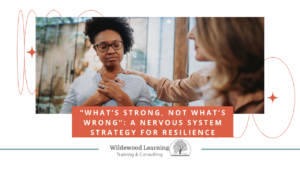
“What’s Strong, Not What’s Wrong”: A Nervous System Strategy for Resilience

Resilience is often thought of as simply pushing through tough times, but in trauma-informed practice, it’s actually about calming the nervous system and recognizing our strengths, focusing on “what’s strong, not what’s wrong” in ourselves and others. This gentle approach encourages understanding and growth for everyone involved.

My mind is constantly scanning for danger. I can’t help it. As I move through a dark parking lot, I grip my keys tightly, the pointed end protruding between my knuckles. Following what I learned in self-defense class, I keep my eyes on the dark corners and the parking area, maintaining a clear view of the door.

The brain’s alertness has enabled humans to survive for over 10,000 years. However, there are many moments when our brain remains on high alert, making it challenging to access problem-solving parts of the brain. This is evident in situations like a customer yelling at a service worker during an exchange, a driver giving the finger to another driver, a loud honk when someone is cut off in traffic, or a child pulling their hood over their head while an adult yells at them. 

This week, as I sat in the Neurosequential Model course taught by Dr. Bruce Perry, I was reminded that the lower part of our brain, the brain stem, is where we are most common as humanity. This is our stress response area of the brain where our reactions to stress can be fight, flight, freeze, or fawn. This part of the brain is often called the lizard or survival brain.

Dr. Perry wrote the book “What’s Happened to You?” with Oprah Winfrey to discuss childhood trauma and how it stays with us through adulthood. The effects of trauma do not go away. If we are aware of our reactions in certain situations, we can begin to build regulation skills to shift from what is wrong to what is strong within ourselves and others. However, this process takes self-awareness and practice. It’s not easy to override the thing that has been keeping us alive for thousands of years. 

Here are three ways you can lean into your strengths and help others lean into theirs as a way to regulate your nervous system.

Noticing Strengths: A Simple Nervous System Reset

When a friend or colleague shares a problematic situation, listen and reflect on what you heard, which is empathetic listening. Acknowledge that the experience was hard, then ask them what has helped them move through such a challenging time. A simple question can help people shift their focus to the strengths in their lives.

Shared Abundance: How Gratitude Supports Nervous System Regulation 

We can keep a gratitude journal to help us see that we are part of a bigger picture. However, one time I kept an abundance journal. My coach had me write down every day all the abundance that came into my life. This could be that a friend bought me a coffee, that I received a paycheck, or that I received a coupon for half off a meal. Whatever I wanted to count as “abundance,” it helped me see how it came into my life daily and how I can spread abundance to others through my actions. 

Calling Out the Strengths: Build Resilience and Confidence

We all have strengths that are specific to who we are. In the CliftonStrengths assessment, strengths are your natural patterns (talents) combined with knowledge and skills, including what you naturally do, have learned, and practice. Recognizing your unique talents, knowledge, and abilities can inspire confidence and self-worth, empowering you to leverage these strengths in challenging situations.

When we practice turning toward our strengths, it can build our resilience. This is a shared journey, and by noticing the people, practices, and strengths within our control, we can support each other and make a meaningful difference in the world through collective resilience. 

If you lead or work in an organization serving children and families, this strengths-based lens is not just personal, it’s cultural. Building resilient teams starts with regulation, safety, and learning to see what’s strong before trying to fix what’s wrong. Incorporating team-based resilience practices can foster a supportive environment that benefits both staff and clients.

How a County Social Service Agency Strengthened the Skills of Its Staff to Increase Resilience

This is the second case study I will share, illustrating Wildewood Learning’s partnerships with schools and organizations that serve families and children, with a focus on trauma-informed, strength-based interventions. The first case study was with a school district in northwestern Minnesota. You can read about it here

The social services agency, located in a small county in northwestern Minnesota, took a proactive approach to staff development. The staff, comprising approximately 20 people, provided and implemented social service programs for the 4,000 residents in the county. Wildewood Learning provided training to the staff over the course of 9 months through three targeted training sessions.

Challenge

The staff members were often disconnected in their work relationships. It was the fall of 2022, and some staff members had not yet returned to the office, while others were on a rotating schedule. There was a strong need to bring everyone together in the agency. Additionally, staff struggled to understand client needs and behaviors. However, through the training, they gained a more compassionate lens in understanding the effects of trauma, leading to a significant shift in their approach.

Solution

In a collaborative effort between Rural Minnesota CEP (Concentrated Employment Program) and the local social services agency, they hired Wildewood Learning (Kathryn Magnusson) to facilitate a Strengths in Action training using the Clifton StrengthsFinder Assessment with CEP and County staff. The training session enabled the staff to come together and create a shared experience, learning about one another’s strengths. 

The positive results led to two additional trainings: one on Trauma-Sensitive Communities, so that all staff, from reception personnel to the director, had a basic understanding of trauma, its effects, and how to create resilience. 

The third training was on the topic of Increasing Optimism. The goal of this training session was to create a positive atmosphere within the workplace, which would, in turn, enhance relationships with colleagues and clients. 

Results

After the three sessions, I sat down with the director to ask how the training had affected the staff.

  • Increased staff positivity and energy: The director noted that the training provided a much-needed “shot of positivity,” helping staff shift their mindset at work. The agency’s commitment to fostering a positive workplace culture was evident in the staff’s increased energy and improved outlook, which were seen as meaningful wins in maintaining a healthier workplace culture.
  • Improved team cohesion: She emphasized the importance of bringing her staff together. By participating in activities as a group, staff had the opportunity to collaborate, connect across departments, and “rub elbows with each other.” The sessions strengthened relationships and reduced feelings of isolation between teams.
  • Shared learning experience: Rather than sending one or two staff to outside trainings, the agency found greater benefit in having all staff learn together. The director observed that when “we’re all in the same room, listening to the same person,” the training messages carried further and were more consistent across the organization.
  • Support for leadership development: The director also highlighted her own growth, noting that bringing training in-house aligned with her annual leadership goals. Hosting ongoing staff development was seen not only as beneficial for the team but also as part of building her capacity as an agency leader.

“These trainings have given my staff the positivity and energy they need to face tough work. When we’re all in the same room, learning together, it builds stronger connections and helps us support each other. Bringing this training in-house has been one of the best ways to invest in my team’s well-being and growth.” 

Amy Ballard, Director, Lake of the Woods Social Services

The work done in collaboration with Wildewood Learning supports the social service director in her goals of creating a positive workplace atmosphere, acknowledging the strengths of the staff, and also creating empathy for clients and colleagues. 

Wildewood Learning offers customized professional development, consulting, and tools to support workplaces in becoming trauma-informed and strength-based places where people thrive. Let’s connect to discuss how we can support your staff, strengthen relationships, and help you achieve your leadership goals for your organization. Connect with Wildewood Learning today!